
BJJ Belt System: Kids to Adult Transition Guide
Explore the transition from kids' to adult BJJ belts, focusing on skill development, instructor evaluation, and preparation for advanced training.
Written by BJJ Academy Finder Editorial Team
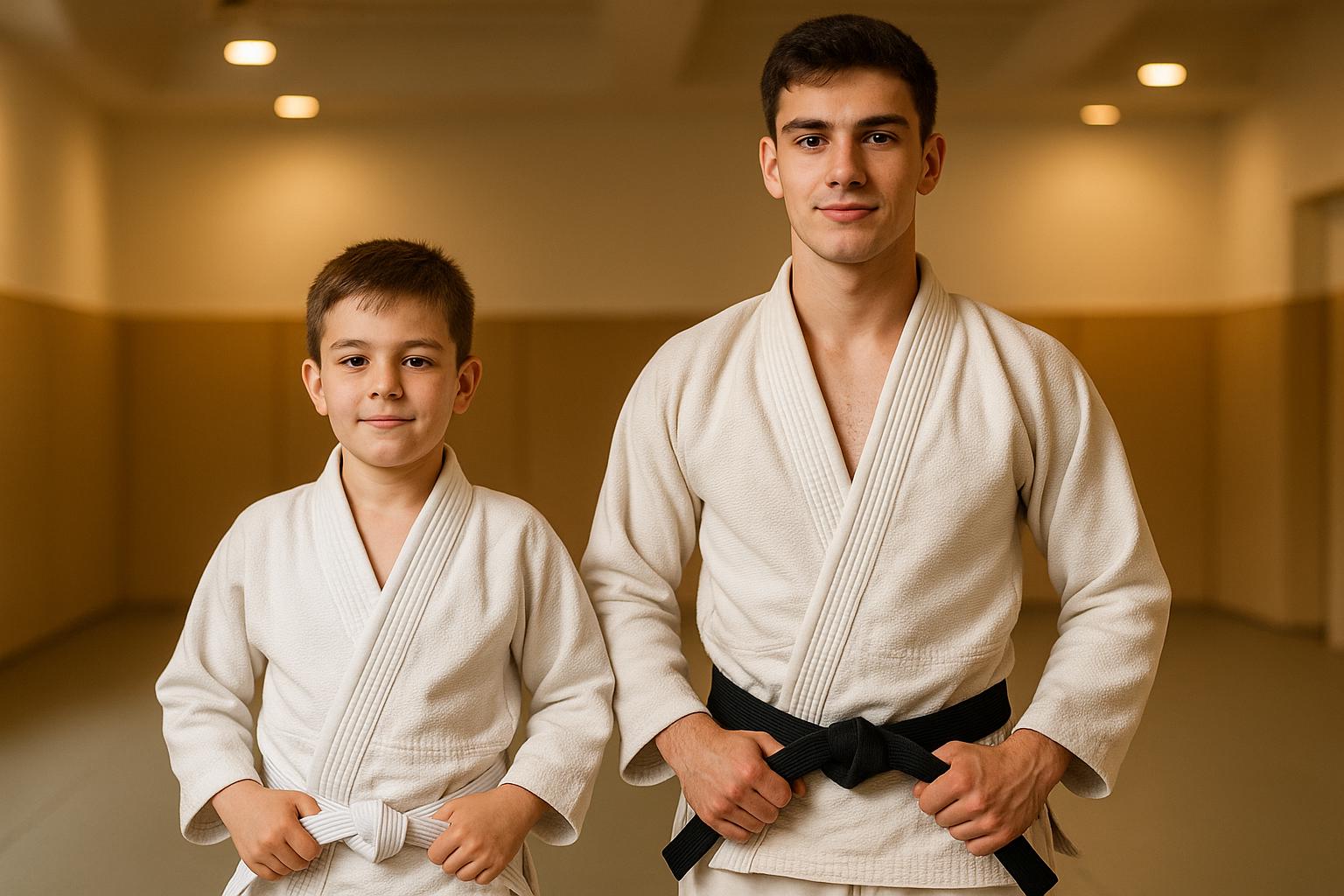
BJJ Belt System: Kids to Adult Transition Guide
Transitioning from kids to adult Brazilian Jiu-Jitsu (BJJ) belts happens at age 16 and is based on skill, experience, and an instructor's evaluation. Kids' belts (white, gray, yellow, orange, green) focus on frequent promotions and short-term goals, while adult belts (white, blue, purple, brown, black) emphasize technical mastery and longer training periods between ranks.
Key Points:
- Kids' System: Frequent promotions every 3–4 months, designed for ages 4–15. Includes more belt colors and stripes.
- Adult System: Fewer ranks with promotions every 2–4 years. Focuses on advanced techniques and leadership.
- Transition at 16: Green belts often move to blue or purple, while lower ranks may start at white or blue, depending on readiness.
- Instructor's Role: Belt placement considers skills, competition history, and maturity.
- Preparation: Train consistently, master core techniques, and develop leadership skills.
For a smooth transition, find an academy with supportive programs and experienced instructors. Use tools like the Brazilian Jiu-Jitsu Gyms Directory to explore options.
Kids Doing Adult Jiu Jitsu When? - Youth Transitioning - Kama Vlog
Kids Belt System: How It Works
The youth belt system in martial arts is designed to help young students build their skills gradually and consistently. Unlike the adult belt system, which has five main belts, the kids' system uses more colors and divisions to provide frequent milestones. This structure helps keep children motivated and engaged. Here's a closer look at the belt order, stripe progression, time requirements, and the reasoning behind this unique system.
Youth Belt Order and Stripes
The IBJJF youth belt system follows a clear progression, with each colored belt (except white) divided into three stages: color/white, solid color, and color/black. For example, a child would move from gray/white to solid gray and then to gray/black before advancing to the yellow belt series.
Stripes are a key part of this system, marking progress within each belt level. Stripes are awarded based on improvements in technique, attendance, and behavior. The number of stripes needed varies by belt:
- White belts require five stripes before moving to gray/white.
- Gray, yellow, orange, and green belts need 11 stripes to complete all three divisions.
For advanced belts, progression includes four white-taped stripes, followed by four red-taped stripes, and finally three stripes in the next belt's color. This visual system makes it easy for both students and instructors to track progress.
Time Requirements and Skills for Each Belt
The youth belt system aligns with the physical and cognitive development of children. The IBJJF sets minimum ages for each belt. For instance, gray/white belts start at age 4, while green/white belts require students to be at least 13. Solid green belts are for ages 14 and up, and green/black belts are for those 15 and older.
Promotions typically occur about once a year, with at least six months between stripe promotions. However, factors like attendance, attitude, and technical progress can influence this timeline.
Each belt level builds on the skills learned at the previous stage:
- White belts focus on basic positions and simple escapes.
- Gray belts work on guard retention and fundamental submissions.
- Yellow belts tackle more complex movements and combinations.
- Orange belts refine technical depth and begin developing their personal fighting style.
- Green belts, the highest youth rank, demonstrate advanced techniques, leadership qualities, and readiness for adult-level training.
| Youth Belt Level | Minimum Age | Stripes Required | Typical Skills Focus |
|---|---|---|---|
| White | 4 years | 5 stripes | Basic positions, simple escapes |
| Gray (all divisions) | 4-6 years | 11 stripes | Guard retention, fundamental submissions |
| Yellow (all divisions) | 7-9 years | 11 stripes | Complex movements, combinations |
| Orange (all divisions) | 10-12 years | 11 stripes | Technical depth, personal style development |
| Green (all divisions) | 13-15 years | 11 stripes | Advanced techniques, leadership skills |
Why Kids Have a Different Belt System
The kids' belt system is designed with their developmental needs in mind. Frequent recognition through belt and stripe promotions provides short-term goals that help maintain motivation. This approach works well for younger students, who often have shorter attention spans and thrive on positive reinforcement.
The system also aligns with children's physical and mental growth. Instead of waiting years between promotions, as adults do, kids receive recognition every few months. This steady feedback not only boosts confidence but also keeps them engaged in their training.
Beyond technical skills, character development is a priority in the youth system. Instructors assess students on their attendance, attitude, respect for others, and leadership potential, ensuring they grow both as martial artists and individuals. This well-rounded approach prepares them for long-term success in the sport and beyond.
Reaching the green/black belt is a major accomplishment in the youth system. This rank typically takes over a decade to achieve, meaning only students who start training at a very young age can reach it before transitioning to the adult system at 16. These students display exceptional commitment and skill throughout their training journey.
For parents seeking quality youth programs, resources like the Brazilian Jiu-Jitsu Gyms Directory can help identify schools with experienced instructors and well-structured kids' curricula.
Adult Belt System: Structure and Standards
As practitioners progress and mature, the belt system in Brazilian Jiu-Jitsu evolves to reflect a deeper level of skill, commitment, and understanding. Unlike the youth system, the adult belt progression is more streamlined, with fewer ranks and longer intervals between promotions. This structure prioritizes technical expertise, leadership, and contributions to the community over frequent recognition, aligning with the unique needs and goals of adult practitioners.
Adult Belt Order and Time Between Promotions
The adult belt system consists of five ranks: white, blue, purple, brown, and black. The International Brazilian Jiu-Jitsu Federation (IBJJF) outlines minimum time requirements for each belt - 2 years for blue, 1.5 years for purple, and 1 year for brown. However, most practitioners typically spend 1–2 years at blue, 2–3 years at purple, and 1–2 years at brown, making the journey to black belt take anywhere from 8 to 15 years.
Within each belt, progress is marked by stripes, with up to four awarded before advancing to the next rank. Stripes are given based on meeting technical milestones and maintaining consistent training.
Here’s an overview of the typical timeframes and focus areas for each belt:
| Adult Belt | Typical Time Requirement | IBJJF Minimum | Focus Areas |
|---|---|---|---|
| White | 0–1 year | None | Fundamentals, basic positions, survival skills |
| Blue | 1–2 years | 2 years | Expanding techniques, developing personal style |
| Purple | 2–3 years | 1.5 years | Strategy, advanced techniques, teaching skills |
| Brown | 1–2 years | 1 year | Refining techniques, leadership, mentoring |
| Black | 8–15 years total | Varies | Mastery, innovation, and community contributions |
Advanced Ranks: Coral and Red Belts
Beyond the black belt lie the most prestigious ranks in Brazilian Jiu-Jitsu: the coral and red belts. These ranks symbolize decades of dedication and extraordinary contributions to the art. Achieving a coral belt typically requires at least 7 years as a black belt, while the red belt - reserved for the most accomplished practitioners - requires an additional 10 years of training after earning the coral belt. Altogether, reaching red belt status represents over 30 years of commitment at the black belt level. These ranks honor not only technical expertise but also significant contributions through teaching, mentorship, and innovation.
IBJJF Rules for Adult Belt Promotions

The IBJJF establishes clear guidelines to ensure consistency across academies. In addition to time requirements, the federation enforces minimum age limits - 19 years for blue belt and 18 years for purple and brown belts. These age thresholds help ensure that practitioners have the maturity and physical development needed for their rank.
Each belt level requires increasingly advanced skills:
- Blue belts must master fundamental positions and escapes.
- Purple belts should demonstrate advanced techniques and strategic thinking.
- Brown belts are expected to show near-mastery and the ability to teach.
- Black belts must exhibit complete mastery, leadership, and a capacity for innovation.
Many U.S. academies go beyond these baseline standards, incorporating additional criteria such as consistent attendance, a positive attitude, competition results, and community involvement. Some even require students to participate in tournaments, mentor lower belts, or demonstrate teaching abilities before promotion. These added expectations not only ensure technical growth but also prepare practitioners for the lifelong journey of learning and mastery in Brazilian Jiu-Jitsu.
Promotion ceremonies for adults are often more formal and meaningful than those for youth. Receiving a new belt in front of peers and family celebrates not just technical progress but also the values of perseverance and dedication that define the adult BJJ experience.
For those seeking academies with strong promotion standards, the Brazilian Jiu-Jitsu Gyms Directory is a valuable resource. It provides detailed information about instructor credentials, program structures, and user reviews, helping practitioners select the best training environment for their goals. This structured system ensures a smooth transition from youth belts to the advanced challenges of adult training.
sbb-itb-d583f1e
Moving from Kids to Adult Belts
Shifting from youth to adult Brazilian Jiu-Jitsu (BJJ) belts is about more than just changing colors. It represents a leap into more advanced training philosophies and higher expectations. This transition requires adapting to increased complexity and embracing new challenges.
Age 16: When the Transition Happens
According to the IBJJF, students must move from the youth belt system to the adult system at age 16. This transition begins at the start of the calendar year in which they turn 16. By this point, most practitioners have developed the maturity needed to handle the intensity of adult-level training.
How Youth Belts Convert to Adult Belts
Switching from youth to adult belts isn’t a direct swap. The youth system includes five belts - white, grey, yellow, orange, and green - while the adult system consists of white, blue, purple, brown, and black belts. Placement in the adult system depends on a student’s technical ability and training consistency.
For example, students with a green belt, the highest rank in the youth system, often transition to a blue or even a purple belt in the adult system. Those with exceptional skill, competition experience, and a deep understanding of techniques may earn a purple belt.
Students at lower youth belt levels - such as orange, yellow, or grey - usually transition to a white or blue belt. Placement depends on their technical mastery and time spent training. Those with less experience or limited proficiency may start at white belt, even if they held a higher rank in the youth system.
| Youth Belt | Typical Adult Conversion | Factors Influencing Placement |
|---|---|---|
| Green | Blue or Purple | Technical skill, competition experience |
| Orange | White or Blue | Training consistency, fundamental knowledge |
| Yellow | White or Blue | Basic technique mastery, mat time |
| Grey | White | Limited experience, foundational skills |
This framework sets the stage for instructors to fine-tune belt placement based on individual readiness.
How Instructors Decide Your New Belt
Once the initial conversion is made, instructors conduct a detailed evaluation to finalize the student’s adult belt rank. This evaluation typically includes an assessment of technical skills, mat time, competition history, and personal growth.
A key part of the evaluation involves observing the student’s execution of fundamental techniques during live rolling. This includes positions, escapes, and submissions.
Competition performance also plays a significant role. Students who excel in tournaments often demonstrate the skills and mindset needed for higher ranks.
Additionally, instructors look at leadership and maturity. They assess how students interact with peers, handle challenges, and contribute to the overall training environment. These qualities can influence whether a student is ready for a higher belt.
The evaluation process may vary between academies. If a student transitions to a new gym, they might undergo a fresh assessment to ensure fair placement. Open communication about prior training experience is crucial in these situations.
This thoughtful process ensures that the integrity of the BJJ belt system is upheld as students progress.
For families navigating this transition, the Brazilian Jiu-Jitsu Gyms Directory can be a helpful tool. It provides resources such as detailed academy listings, instructor credentials, and user reviews to help find gyms that support a smooth progression from youth to adult training.
Tips for a Smooth Belt System Transition
Transitioning from youth to adult Brazilian Jiu-Jitsu (BJJ) can feel like a big shift, but with the right preparation and mindset, it doesn’t have to be overwhelming.
Getting Ready for Adult Classes
Consistency is key. Training regularly - around 2–3 times per week - helps build the endurance and muscle memory needed for the more demanding adult classes. Focus on mastering core techniques like guard, mount, side control, escapes, and submissions. Taking on leadership roles, such as helping newer students, can also boost your confidence and make the transition feel more natural. It’s all about adopting a mindset centered on long-term improvement rather than immediate rewards.
Setting realistic expectations is another important step. You don’t need to know everything on day one - adult classes are designed to accommodate a range of skill levels. Remember, every advanced student started as a beginner, and this perspective can help ease any anxiety about stepping into a new environment. Building this foundation will prepare you for the advanced techniques and longer training sessions that adult classes typically involve.
Having a clear understanding of how adult classes work can also help you evaluate potential academies.
What Adult Classes Are Like
Adult BJJ classes generally follow a structured format: a warm-up to get you moving, technique drills to refine your skills, and live sparring to put those techniques into practice. The pace is faster, and the techniques are often more intricate compared to youth classes.
The physical demands also increase. Adult classes feature longer sessions, tougher warm-ups, and a stronger emphasis on live sparring. While the fundamental movements - like shrimping, bridging, and basic positions - are still taught, they require greater precision and control.
Another big adjustment is the social aspect. Adult classes bring together students of all ages, sizes, and experience levels. You’ll often train with partners who may be larger, stronger, or more advanced. While this might seem intimidating at first, quality academies prioritize safety, proper technique, and controlled sparring to create a supportive learning environment.
One of the most important shifts is taking responsibility for your own progress. While instructors are there to guide you, adult students are expected to actively engage in their learning - asking questions, seeking feedback, and putting in extra effort. This self-driven approach is essential for long-term success in the adult program.
Understanding these dynamics can help you choose an academy that aligns with your needs and goals.
Choosing the Right Academy for Your Transition
Finding the right academy is crucial for a smooth transition. Look for schools that offer structured programs tailored to students moving from youth to adult classes. Qualified instructors, small class sizes, and trial classes are key factors to consider. Smaller student-to-instructor ratios often mean more personalized attention, which can be especially helpful during this adjustment period. Check if the academy offers classes for all levels - beginner, intermediate, and advanced - to ensure there’s a clear path for your growth.
Trial classes are a great way to get a feel for the environment. Pay attention to how instructors interact with transitioning students - do they provide extra support or guidance to help you settle in?
The Brazilian Jiu-Jitsu Gyms Directory is a handy tool for families navigating this transition. It includes detailed listings with information about programs, instructor credentials, and user reviews. You can search for academies by location, compare ratings, and even contact schools to ask about their youth-to-adult transition programs. Doing this research upfront can help you find a supportive academy that sets you up for success in your BJJ journey.
Key Points to Remember
Transitioning from youth to adult Brazilian Jiu-Jitsu (BJJ) is a significant step, guided by established standards and practices.
Youth belts feature more frequent stripe promotions and a variety of colors. In contrast, the adult belt system follows a simpler structure, progressing through five belts with intervals of 2–4 years between promotions.
Your starting adult belt is determined by your instructor, taking into account factors like technical skills, maturity, competition experience, and your ability to lead.
Earning a black belt typically takes 8–15 years. Along the way, there are minimum time requirements: approximately 2 years at blue belt, 1.5 years at purple belt, and 1 year at brown belt.
To prepare for this transition, focus on training 2–3 times a week, mastering essential techniques, and taking on leadership roles. This combination will help you adjust smoothly to the adult system and expectations.
When choosing an academy, look for qualified instructors, small class sizes, and programs designed to guide you through this transition. The Brazilian Jiu-Jitsu Gyms Directory is a helpful resource, offering detailed information on instructors, class offerings, and user reviews to aid in your selection.
FAQs
How do instructors decide which adult belt a youth should receive when transitioning from the kids' program?
When a young student moves from a kids' Brazilian Jiu-Jitsu program into an adult program, instructors carefully assess several factors to decide on the appropriate adult belt. These factors typically include the student’s age, skill level, training history, and competition experience. The aim is to match the belt to the student’s abilities while adhering to IBJJF guidelines and ensuring fairness within the adult ranking system.
For instance, a child who has earned an advanced kids' belt, like a green belt, might transition to either a white or blue adult belt. This depends on their technical skills, sparring performance, and level of maturity. To make the right decision, instructors closely evaluate these aspects and often engage in open discussions with the student - and sometimes their parents - to ensure the transition is both smooth and fair.
How does the focus of training change between the kids' and adult BJJ belt systems?
The shift from the kids' to the adult Brazilian Jiu-Jitsu (BJJ) belt system marks a significant evolution in training. For younger students, the focus is typically on mastering basic techniques, developing discipline, and nurturing a genuine passion for the sport within a supportive and encouraging atmosphere. However, as they step into adult programs, the training intensity ramps up, emphasizing advanced techniques, strategic thinking, and preparation for competition.
The International Brazilian Jiu-Jitsu Federation (IBJJF) guidelines also play a crucial role in this transition. These rules include age-specific requirements that determine when a practitioner is eligible to move into the adult belt system. This structured approach ensures that skill development remains steady and consistent while preserving the integrity of each belt level.
What factors should parents look for in a BJJ academy when their child is transitioning to adult belts?
When choosing a BJJ academy for your child as they move into adult belts, there are a few key factors to keep in mind. First, focus on finding instructors with solid experience in helping students navigate this important transition. Their guidance can make a huge difference in your child’s progress.
Next, consider the class schedule. A flexible timetable that fits your family’s routine is essential to keep training consistent and stress-free. Don’t overlook the importance of a clean, well-maintained facility - a good environment fosters better learning and safety.
Another critical aspect is the student-to-instructor ratio. Smaller classes mean your child will get more personalized attention, which is especially valuable during this phase of their development. Lastly, make sure the academy offers programs tailored to your child’s current skill level and future goals, so they can grow confidently in their BJJ journey.
Related articles
Share this article